
Allen County Warrant Searches
The public entry point is the Sheriff's Warrants & Fugitive Division page, which links the Allen County interface on TheMostWanted.net. Search it for yourself or for a relative who has asked for help. Skip the rest. Don't copy a live card, photograph, birth date, address, or charge detail; the screen orients you, but the Warrant Division or issuing court sets current status. From there, run the name through MyCase by case number, citation number, cross-reference number, or party details. Filter to an Allen court when you can. If the two sources disagree, call the Clerk at (260) 449-7245 or the Warrant Division at (260) 449-7636 and ask them to settle it.
- Record the exact name and any case or citation number.
- Use the Sheriff-linked public interface and note its update date.
- Search MyCase for the court and chronological case summary.
- Call the proper custodian to confirm status and next steps.
- Speak with an attorney before surrender or a court filing when needed.
Allen County Warrant MyCase Search
MyCase is Indiana's public case-information service, not a statewide warrant index. What it does well is connect a possible Allen County warrant to its court, case number, hearing history, and public orders. That context counts when a search turns up a common name or the public warrant display lacks enough non-sensitive detail to pin down the case. The official MyCase entry screen opens the statewide court search without exposing anyone's preselected result, so you start from a clean slate each time.
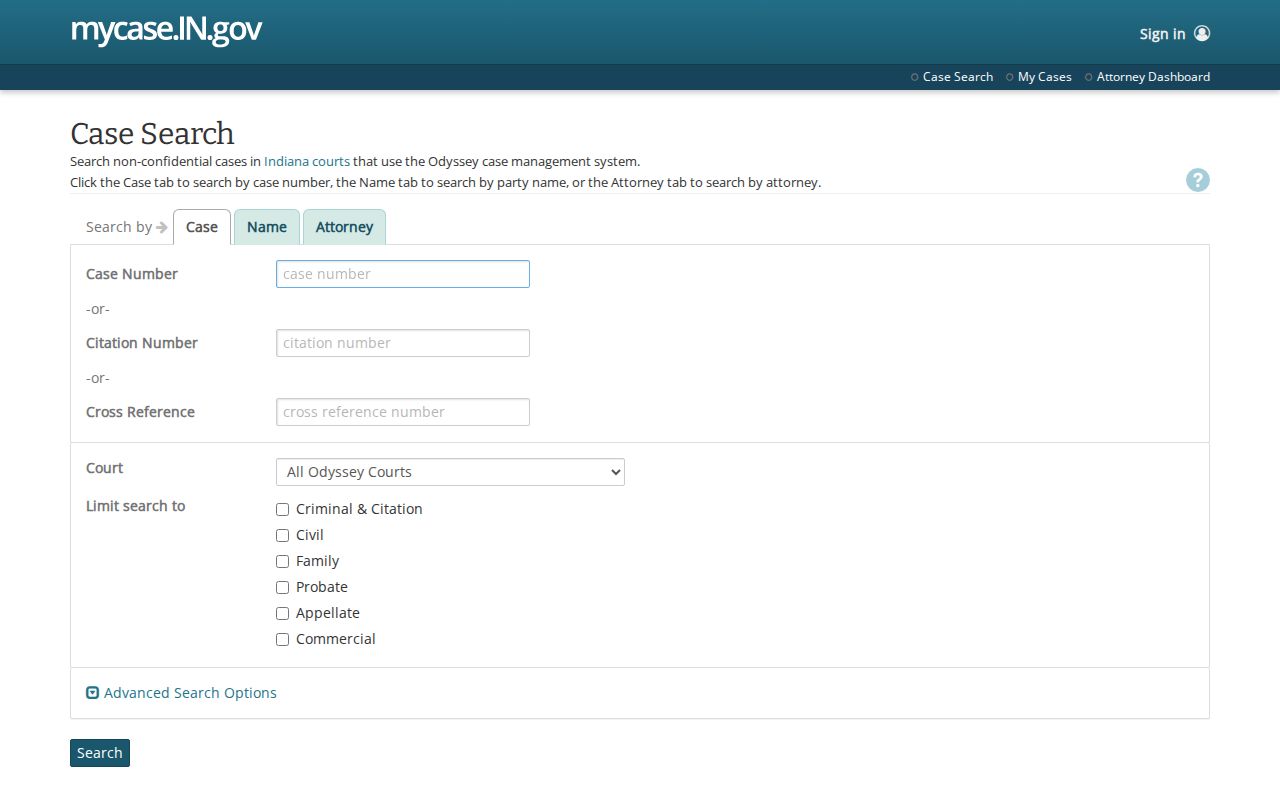
A public Allen County case on the screen is still an unofficial copy, and the online docket can carry gaps or stale financial information. A missed hearing may show up in the chronological case summary. That entry is not a current warrant certificate, though. Sealed, expunged, juvenile, older, and otherwise restricted matters may simply be missing from view. For copies and case-specific record questions, the Allen County Clerk holds the official court file and provides the path that actually confirms what is on record.
What a Warrant Search Asks For
The two tools ask different questions because they do different jobs. The sheriff-linked warrant interface gives a free-text search, two select controls, A–Z browse links, and a "Show New Warrants" action. MyCase, in turn, takes identifiers, party data, attorney details, and a court filter. Whichever you open, use the most precise identifier you have. Narrow beats broad every time in an Allen County warrant search.
| Field | System | Use |
|---|---|---|
| Search Warrants text | Sheriff-linked interface | Narrow public display by name text |
| A–Z / Show New | Sheriff-linked interface | Browse visible entries without certifying completeness |
| Case, citation, or cross-reference number | MyCase | Reach one case with less name ambiguity |
| Last and first name or DOB | MyCase party search | Distinguish parties when used privately |
| Court filter | MyCase | Limit results to the likely Allen court |
| Sounds-like or wildcard | MyCase | Address spelling variation |
MyCase caps any search at 1,000 results. An Allen County court filter or a case number brings a broad result set back down to something useful.
Allen County Warrant Court Search
Allen County sits in Indiana Judicial District 7. Its records can point you to the Allen Circuit Court or one of nine Allen Superior Court divisions. Those divisions cover criminal, misdemeanor, infraction, traffic, family, small-claims, and other matters. One elected Allen County Clerk administers all the trial-court records. The Indiana Odyssey courts list shows the current Allen Circuit and Superior court identifiers along with the former Allen/New Haven City Court, so you can match a case to the right Allen County court before you call.
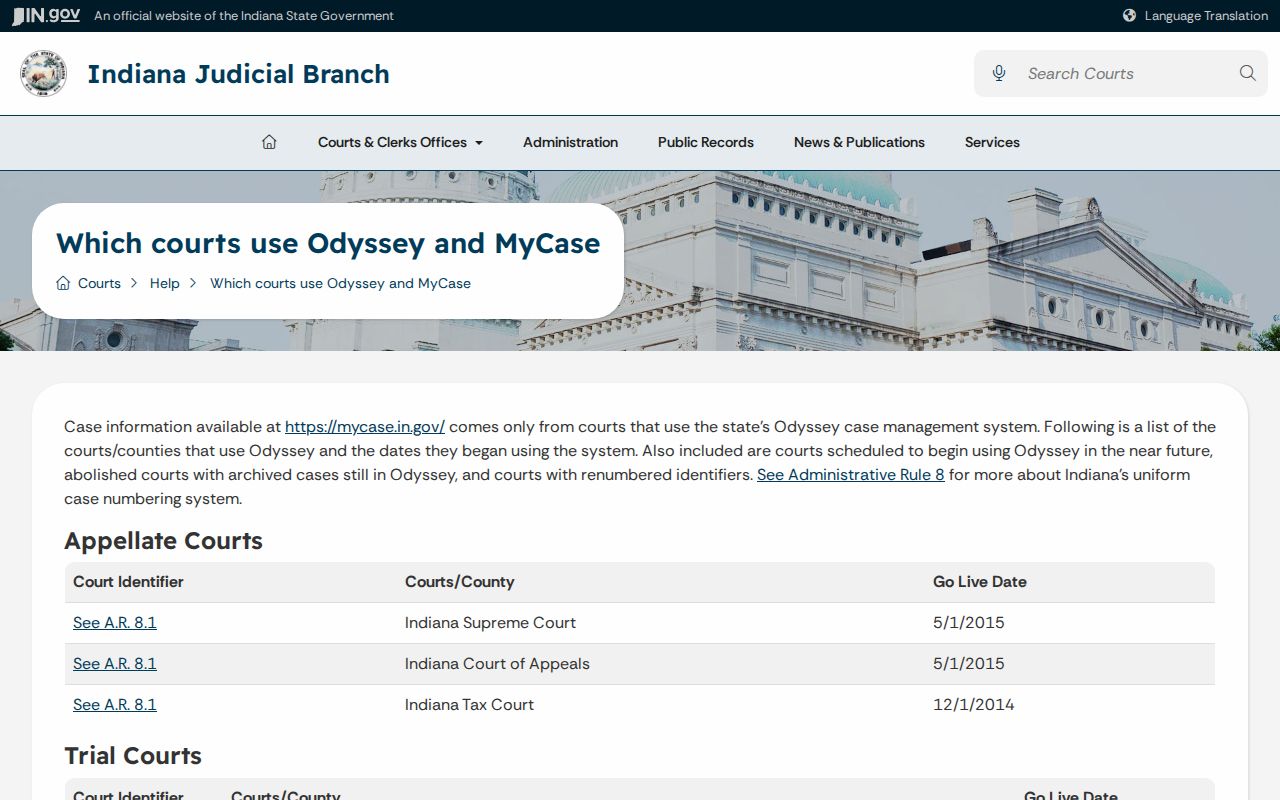
That list also confirms the Allen/New Haven City Court was abolished at the end of 2018. Old New Haven pages still mention it. Treat those as history, and verify with the Clerk. One more caution: never ask a judge to discuss a case privately. Court staff can route a record request, and an attorney works through the formal case process for anything legal.
Allen County Warrant Search Results
Read every public result against its source. The sheriff-linked page can show an entry displayed at the time of your search, nothing more. MyCase shows a public docket and some orders. The Clerk supplies the official court record for Allen County. The Warrant Division alone can speak to the current operational status of a warrant category it handles, so take the final question there.
| Person or party | Use only to locate the correct self-inquiry; verify identity privately. |
|---|---|
| Case number | The strongest link to the Allen court file. |
| Court | The Circuit or Superior Court division that holds the case. |
| Docket event | A public filing, hearing, order, or failure-to-appear notation. |
| Warrant type | Bench, arrest, probation, parole, family, or civil process when confirmed. |
| Status date | The date tied to the source, not a promise of real-time accuracy. |
A result does not safely prove identity, live bond, recall, or complete statewide status. Write down the source and time, then confirm with the Allen County office that owns the record.
Allen County Warrant Case Numbers
A case number usually beats a broad name query. Names carry spelling variants, hyphens, suffixes, aliases, and plenty of shared first-and-last combinations. MyCase offers sounds-like and wildcard tools, but both invite false matches. A citation or case number points to one defined court file and keeps you from leaning on another person's record in an Allen County search. The Indiana Judicial Branch search tips walk through identifier, party, attorney, court, sounds-like, wildcard, and result-limit options one by one.
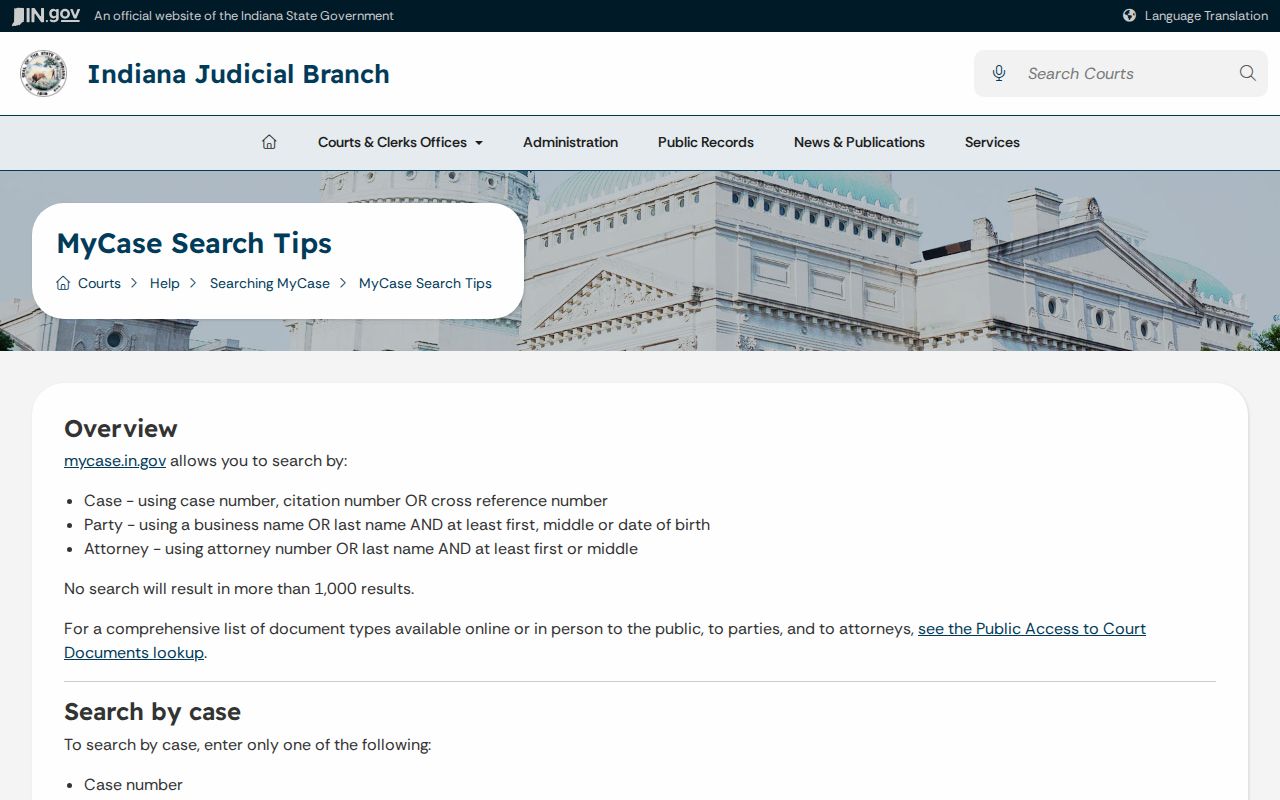
That guidance explains why a narrow Allen County case search supplies better context than a bare name match. If all you have is a name, pair the result with the right court and public case details before trusting it. Don't publish or keep extra personal data from unrelated results.
Allen County Warrants: Who Holds What
Indiana has no one-stop public warrant database. The Sheriff-linked interface is the public Allen County active-warrant lead. Its Warrant Division handles listed bench, probation, parole, family, and body-attachment categories. The Clerk keeps the Allen Circuit and Superior Court files. Police departments hold their own reports, while systems like IDACS and NCIC stay closed to public searching, so the trail for an Allen County warrant ends at these offices, not one portal.
| Channel | Best question | Boundary |
|---|---|---|
| Sheriff interface | Does a public Allen entry display? | Not a certified complete result |
| Warrant Division | What status and surrender instruction can be confirmed? | May direct the caller to the court or supervision office |
| MyCase | What public case history appears? | Not a complete warrant or criminal-history source |
| Allen County Clerk | Which court file and copy are official? | Staff cannot give private legal advice |
| NextRequest | Can a Sheriff-held record be requested? | Exempt and court-held records follow other routes |
A tax warrant is a different animal. It runs through the Indiana Department of Revenue route and has nothing to do with an Allen County criminal warrant.
Allen County Warrant Search Conflicts
When Allen County sources disagree, dig into the details rather than guessing. A public warrant entry can stay online after a court event has passed. A new order may not appear at once. MyCase can show a missed date without the full warrant action. So write things down. Save the case number, court name, source, and date. Then ask the Clerk and the Warrant Division which record controls. Five questions do most of the work: what type of warrant or process is involved, which court issued it, and what case number controls? Is the Allen County warrant active, served, or recalled? What is the next official step? If surrender is directed, ask about the current entrance, identification, bond method, and any hold before travel.
Search result rule: A zero result is not a clearance, and a positive result is not a substitute for direct Allen County confirmation.
Note: Preserve the search date and the interface update date because either can differ from the court's current warrant status.
Which Warrants Stay Restricted
Indiana Court Records Rule 4 sets the baseline for public access in Allen County. Rule 5 lists what stays confidential or excluded. Juvenile, sealed, expunged, mental-health, investigative, and protected records may not appear. An arrest-warrant request can also be withheld for a time when release would risk flight, harm, or interference with an investigation.
Access point: The Indiana Access to Public Records Act applies to many agency files, but judicial rules and the Clerk's role govern court records.
A missing Allen County record can be a lawful limit, not a lost file. Ask before assuming. The office that holds it can confirm whether a public record exists and what request process applies. And APRA does not override the court's confidentiality rules.
Allen County Warrant Record Requests
Allen County splits its records work cleanly, and knowing the split saves real time. Start with the Sheriff's NextRequest process. It covers non-exempt records the Sheriff maintains. Keep the request narrow: name the record, the party involved, the date range, the location, and the incident or case number. Court documents go to the Clerk instead. A report written by Fort Wayne, New Haven, or Woodburn Police belongs with that agency. Some material is exempt or delayed. Active investigations, juvenile records, protected personal information, confidential informants, and public-safety-sensitive files all qualify. An Allen County records response is not a live warrant-status check. For current status, call the Warrant Division directly. For a court order or a certified copy, use the Allen County Clerk. That division of labor protects both accuracy and privacy. It also lets the custodian find the file without an unfocused search for personal information. Allen County policy draws one more line. You may request an existing record, but you cannot demand that staff create a new analysis. Describe the document or event in enough detail to locate it. Then ask which office holds it. If what you need is current warrant status, pick up the phone rather than waiting on a records response.