
How Arrest Warrants Work in Allen County
An arrest warrant in Allen County begins with facts, not a missed court date. Police or an investigating agency file a sworn affidavit. A judge or magistrate then asks one question: do these facts show probable cause? That means a sound basis to think a crime happened and the named person did it. If the answer is yes, the warrant authorizes law enforcement to take that person into custody. The whole process runs under Indiana Code Title 35 and the Indiana Rules of Criminal Procedure. Allen County sits in Indiana Judicial District 7, served by Allen Circuit Court and the Allen Superior Courts. The Clerk of the Allen Circuit and Superior Courts holds the official court files for all of them.
Allen County Probable-Cause Path
The Allen County arrest warrant process follows distinct official steps. Learning the sequence explains the lag. A public record can sit behind what police systems already show, so a docket result alone cannot certify current status.
- An investigating agency gathers facts and submits a sworn request.
- A judge or magistrate decides whether probable cause supports arrest.
- An issued warrant enters operational law enforcement systems for service.
- An authorized officer serves the Allen County arrest warrant when located.
- Booking, an initial hearing, release terms, and later court dates follow as the case requires.
Timing depends on the case. Bond, another agency hold, access to counsel, and the court calendar all shape what happens after arrest. MyCase may later show a filing, case number, charges, dates, orders, or a chronological case summary. It never promises real-time warrant status, so Allen County records still need direct confirmation.
Arrest Warrants: What They Contain
A privacy-safe Allen County warrant record leans on identifiers and process, not personal detail. Some fields never reach a public screen, and the request itself can stay restricted before service. Skip copying information from a live listing. Use the case number instead, and ask the Clerk or issuing court to confirm what a public page cannot.
| Case number | The court identifier, shown only as a generic format such as 02D00-CR-000000; no universal warrant-number format was verified. |
|---|---|
| Warrant type | Separates arrest process from a bench warrant, search warrant, or civil body attachment. |
| Issue date | The date of judicial authorization when public. |
| Issuing court | The Allen Circuit or Superior Court division responsible for the order. |
| Legal basis | The charge category or probable-cause basis when access permits disclosure. |
| Status and bond | Current status and public release terms, both needing direct confirmation. |
| Serving agency | The Sheriff, municipal police, State Police, or another authorized agency. |
Keep a personal note of where and when you checked. Allen County or not, skip writing down birth dates, home addresses, photographs, or unverified charges.
Hidden Allen County Arrest Warrant Requests
Indiana opens court records to the public as a starting point, but the baseline has exceptions. Confidential, sealed, juvenile, and investigative material can all stay out of ordinary view. So can a pending arrest warrant request, because Indiana Access to Court Records Rule 5 permits temporary exclusion when disclosure would create a specified risk. That rule explains why an Allen County warrant lookup returns nothing public even while police hold an operational record, and why only the issuing court can confirm what exists.
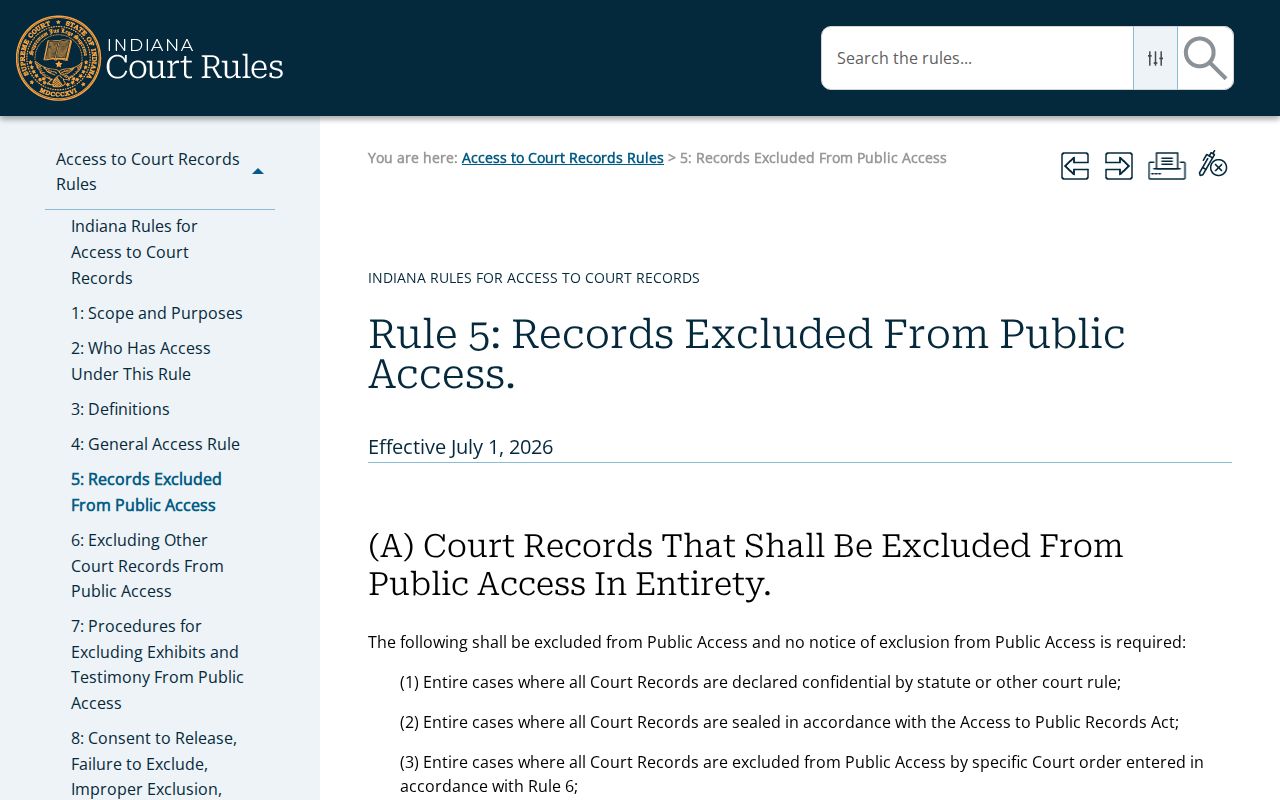
A missing document points to a legal limit, not proof that no warrant exists. A later Allen County case record may show the filing, hearing, or order once the matter turns public.
Access rule: No public result is not an official clearance when an arrest warrant request may be restricted or not yet posted.
How Warrants Get Served in Allen County
Once issued, an Allen County arrest warrant passes to law enforcement. The Allen County Sheriff Warrants & Fugitive Division manages county warrant and fugitive work, extradition, transport, and surrender instructions. Fort Wayne Police, New Haven Police, Woodburn Police, Indiana State Police, or another authorized agency may make the arrest, depending on jurisdiction. Huntertown and Leo-Cedarville get contract policing through the Sheriff. Dispatch checks active warrants through CAD/RMS linked to IDACS and NCIC. Those are operational systems. The public cannot search them. Service may come during officer contact or a planned operation. Booking and an initial hearing follow as the case requires, and no fixed custody or hearing time should be assumed in Allen County.
Note: Never approach or try to apprehend a person based on a public warrant entry; contact law enforcement for safety concerns.
Allen County Arrest Warrant Routes
Each channel answers a different question. Start with the Sheriff-linked interface for a public lead. Call the Allen County Warrant Division at (260) 449-7636 to ask whether a current warrant exists and which court issued it. Search Indiana MyCase for the public case. For court records or formal procedure, contact the Clerk at (260) 449-7245 or the issuing division.
Warrant Division
Confirms county warrant routing and current surrender instructions.
(260) 449-7636
Allen County Clerk
Maintains Circuit and Superior Court case records and public copies.
(260) 449-7245
Need a Sheriff-held report? Use the Sheriff public-record request portal with a narrow description, date range, location, and case or incident number. General APRA requests do not replace the proper court or police custodian. Indiana has no single public statewide criminal warrant search, and IDACS and NCIC are not public fallbacks, so Allen County channels are the route.
Arrest Warrants, Summonses, and Bench Warrants
These documents do different work. An arrest warrant rests on probable cause found by a judge. A summons directs a person to appear without ordering custody first. A bench warrant usually follows nonappearance or failure to comply with a court duty. Allen County sources say "bench warrant" and "failure to appear," not capias.
| Feature | Arrest warrant | Summons | Bench warrant |
|---|---|---|---|
| Core command | Take the person into custody | Appear at the set time | Bring the person before court |
| Typical basis | Probable cause for an offense | A case can start without custody | Missed date or noncompliance |
| Response | Confirm, seek counsel, plan surrender | Attend and follow the notice | Ask about hearing or recall |
| Key source | Court and serving agency | Court notice and docket | Court, Clerk, and Sheriff |
A search warrant is different again. It authorizes a search of a place, person, or item within its terms. It is not an arrest-status lookup. A 2026 Allen County task-force release concerns a search operation, so do not read it as a personal arrest-warrant list.
Public Access to Allen County Arrest Warrants
Indiana Access to Court Records Rule 4 sets the public-access baseline for Allen County court records, subject to Rule 5 exclusions. The official Rule 4 page makes clear the two rules must be read together.
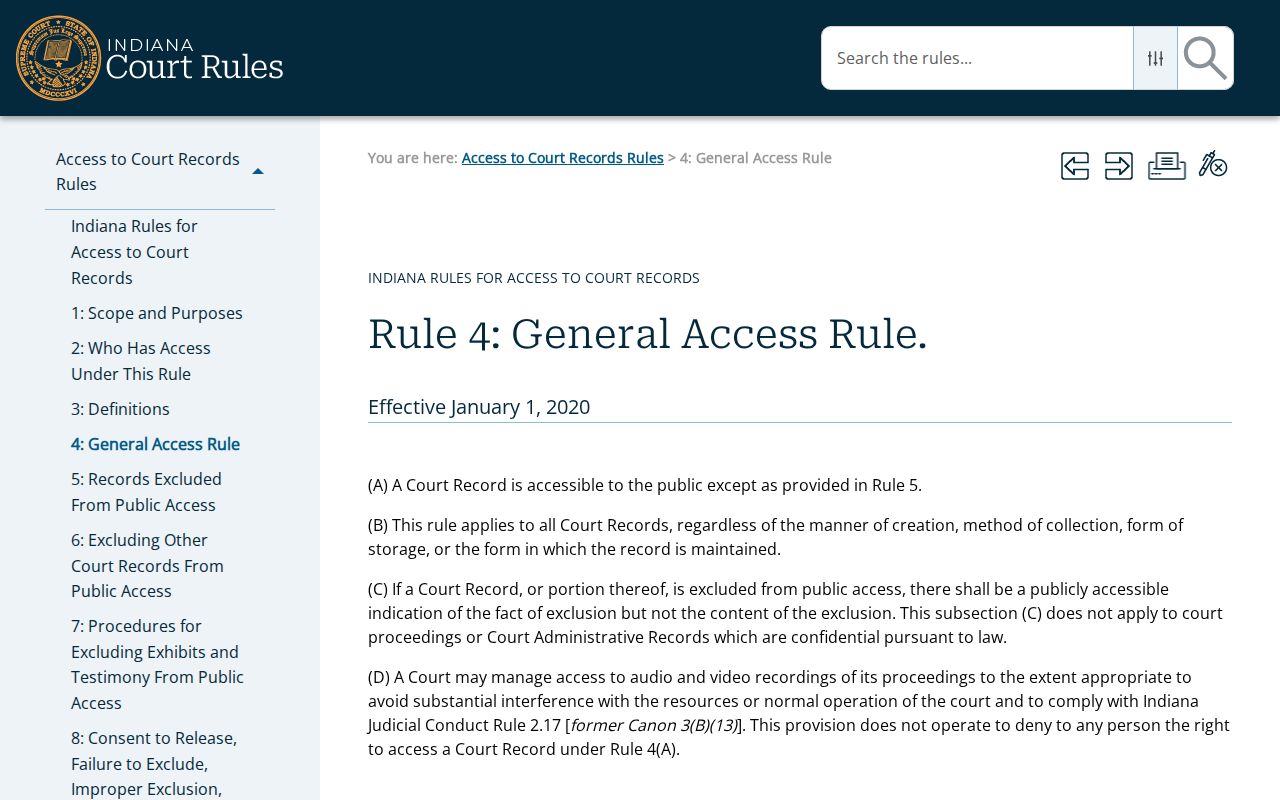
Allen County court records are public at base, but some files stay closed. A sealed affidavit, a juvenile record, a protected investigation, or an excluded arrest-warrant request stays out of reach. Indiana Administrative Rule 9 sets out how remote public access works, along with record formats, calendars, and the duties that go with them.
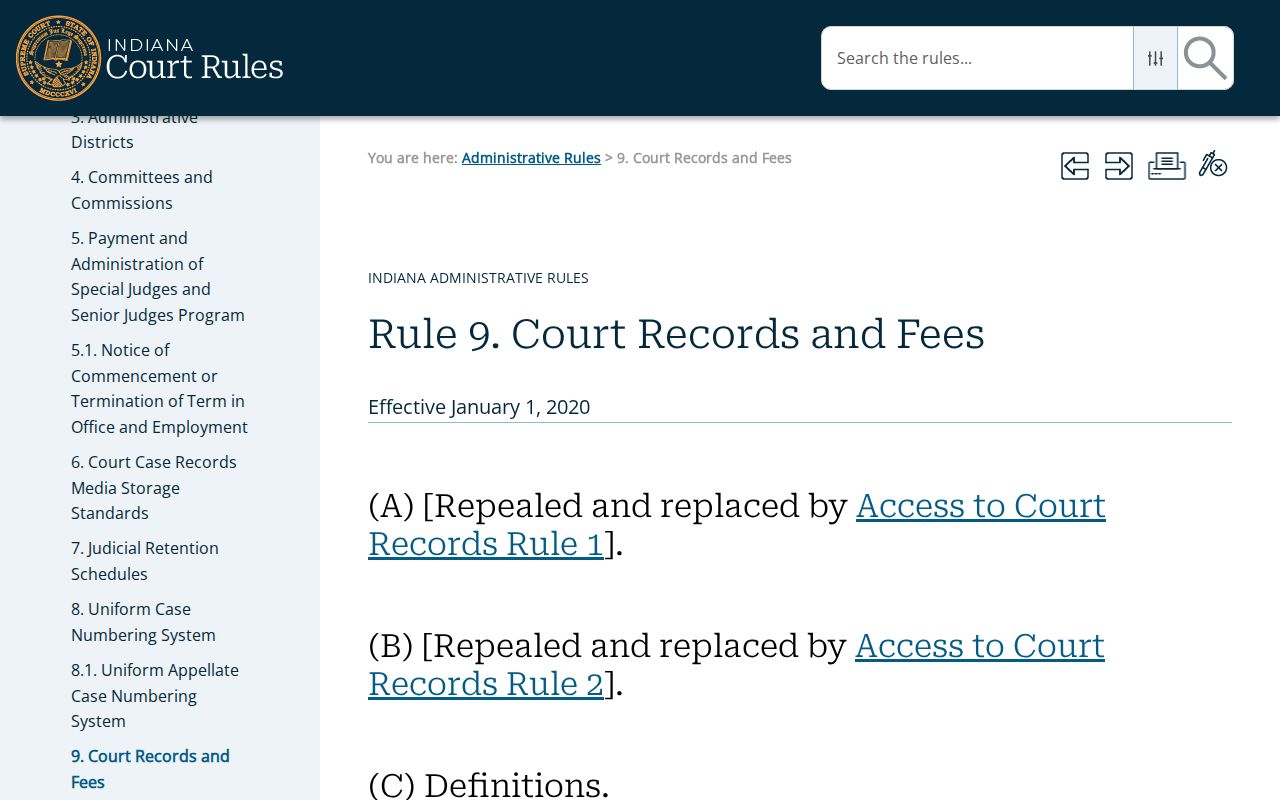
Rule 9 makes remote access one route, not the whole Allen County record system. Indiana APRA governs records that agencies hold, while court files follow judicial rules instead. So take court material to the Clerk, and agency-held material to the police department or Sheriff with the file.
Allen County Arrest, Booking, and Hearing
Service of an Allen County warrant starts a new phase. Booking records the arrest and flags any other holds. An initial hearing then takes up the charge, rights, counsel, and release within the case process. No single outcome is guaranteed, because the issuing order, the alleged offense, prior terms, probation or parole issues, and other holds can each change what release looks like.
- Booking
- The intake process after arrest.
- Initial hearing
- An early proceeding on charges, rights, counsel, and release.
- Bond
- Security ordered for release under case-specific terms.
- Recall
- Official action withdrawing a warrant, verified with the court or agency.
The Sheriff states that cash or surety bond may be posted when applicable, but it publishes no universal amount table. Posting bond does not dismiss a charge. It does not seal a record either, and a later court date still controls the case. Keep the case number, receipt, order, and date from every official Allen County contact.
Handling an Arrest Warrant in Your Name
First, confirm that the Allen County arrest warrant is real and current. Ask the Warrant Division what type it is and which court holds the case. Then compare that answer against MyCase and the Clerk record where it is public. A lawyer can request the right hearing, move to recall or quash the warrant when permitted, and help you plan a voluntary appearance. To quash simply means the warrant is canceled by valid court action. If the Sheriff directs you to surrender, the published route is Allen County Lockup Door #21 on the north side of Superior Street between Calhoun and Clinton. Call first. Bring photo identification. Expect immediate custody, booking, a hearing, and possible bond. Cash or surety bond may apply, with the amount and availability depending on the case. Payment alone does not prove the warrant was recalled.
- Write down the court, case number, source, and date checked.
- Call the Warrant Division and Clerk or issuing court.
- Speak with an attorney about surrender, bond, or a formal motion.
- Follow the current Door #21 instruction if surrender is required.
- After court action, obtain direct proof of recall and release terms.
The broader Allen County warrant resolution overview addresses other warrant types. A criminal arrest warrant always needs a case-specific response.
Important: Speak with an attorney before surrender; voluntary appearance, bond, or a motion works only through the proper official process.